Molten Expectations
For most of the last century, building a big business meant the same thing: hire people, add layers, scale by adding bodies. Even the more sophisticated models (Apple’s specialist-led matrix, Amazon’s two-pizza teams) still assumed that value scales with headcount.
That assumption is melting.
Midjourney generates $500 million in annual revenue with roughly 40 people and zero venture capital. Lovable (an AI app builder) reached $100 million ARR in eight months, possibly the fastest-growing startup in history. Sam Altman predicted the one-person unicorn in 2024. Two years later, Sequoia is already adjusting its underwriting models for “agentic leverage,” the ability of tiny teams to produce outsized output with AI. The question isn’t whether it will happen. It’s how many industries it will hit at once.

From liquid to molten
In 2015, Fjord (Accenture Interactive) named something that was quietly reshaping consumer behaviour. They called it “liquid expectations.”
The insight: we’d stopped comparing experiences within categories. Your airline check-in experience isn’t competing with other airlines. It’s competing with Disney’s app. Your bank’s onboarding isn’t competing with other banks. It’s competing with the frictionless way you signed up for Spotify last week.
Expectations had become liquid: seeping across category walls, equalising everything they touched.
That was a decade ago. It took years for most businesses to even notice.
Now, in 2026, Accenture’s own employees are on Reddit complaining their internal AI tools are rubbish compared to what they use at home. The company that named liquid expectations is drowning in molten ones. The gap between what people can do at their kitchen table and what their employer lets them do at work has never been wider.
Liquid expectations asked businesses to look outside their category or be disrupted. Molten expectations are asking something harder: rethink the business itself.
The underlying force is the same: your benchmark is always your best experience, regardless of where it came from. But liquid was a slow seep. Molten is that same force superheated, moving faster than most organisations can respond to. And it’s reshaping the ground for everyone standing on it.
What makes molten different
Liquid expectations eroded category walls over years. Molten expectations blow them apart in months.
Speed. In February 2026, four frontier AI models launched within two weeks. What was genuinely impressive in January was table stakes by March. The baseline doesn’t shift. It erupts. Businesses that plan on 12-month product cycles are planning on terrain that no longer exists.
Scope. Liquid expectations were primarily about consumer experience: better UX, smoother service, faster delivery. Molten expectations hit the business model itself. How many people you need. What your category even is. Whether your org structure makes sense when two people with the right tools can outship a department of 40.
Self-reference. We’re now benchmarking AI against AI. Last month’s model is this month’s disappointment. Reddit users call it “the lobotomy effect” when a model feels dumber than it did last week. The language tells you something. You don’t say your calculator got lobotomised. You say that about something you had a relationship with. The reference point is moving as fast as the capability itself.
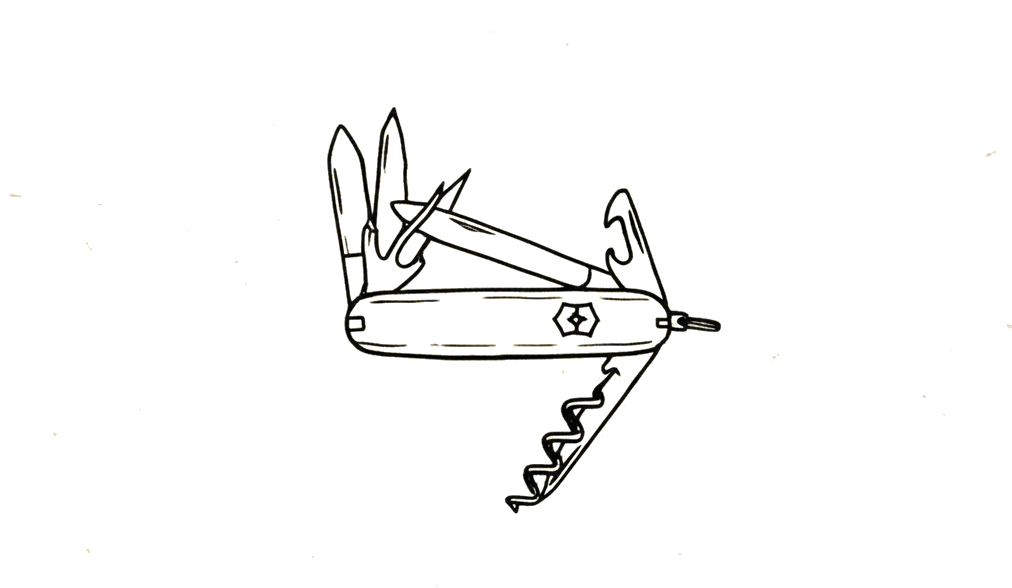
Why does your business only do one thing?
Your bank knows more about your financial life than anyone. Why can’t it help you sort your life admin? The data is right there. Your health insurer has your claims history, your demographics, your risk profile. Why is it just paying invoices?
The companies that get this are already moving. Whoop started as a fitness band. Now it’s doing bloodwork, hiring 600 people, and explicitly trying to “own the category” of health monitoring.
Eight Sleep just raised $50 million at a $1.5 billion valuation and said publicly they’re taking health intelligence “beyond the bedroom and into every dimension of personal health.” They started as a mattress company. They’re not diversifying for fun. They’re expanding because if they don’t fill the space, ChatGPT will.
Consumers haven’t fully landed here yet, but they will. Once people experience what AI can do with their data in one domain, they’ll expect it everywhere. Category walls won’t just be eroded. They’ll be irrelevant.
Ideas to execution
For years I’ve wanted a simple sports tracking app for my kids’ basketball and rugby. I tested about 10 different apps over the years. None of them did the job. I ended up back in Apple Notes. At one point I tried building something in Xcode, but the degree of difficulty (and my lack of time) was too high. The idea sat there.
A few weekends ago, with Claude Code and Google Gemini, I built it. iOS app for iPhone and iPad, subscription model, brand design, design system, and a website. Whether my little app turns into the next Midjourney, the jury is very much out. But the gap between having an idea and shipping it has collapsed. That’s the point.
Dave Clark, former SVP of Operations at Amazon, posted about a weekend where he built an entire customer prototype, reworked a deck, and created a custom CRM. Three things that used to take months, done in 72 hours.
The 12-month innovation pipeline won’t survive when your competitors can come from anywhere. Including someone’s couch.
Most businesses won’t move this fast. Most banks won’t solve your life admin. Most health companies won’t expand beyond their lane. But the ones that do will set a new floor that the rest can’t reach. AI lowers the barrier. It does not lower the ceiling.

The amplifier, not the equaliser
There’s a prevailing thought that AI is the great equaliser. Everyone gets access, everyone levels up.
The evidence says the opposite. A Reddit thread put it bluntly: “AI didn’t flatten the skill curve, it amplified it.” Without an idea, an insight, a point of view, you just get to average much faster than before. The best get dramatically better. The rest get the illusion of competence.
Lava doesn’t level the ground evenly. It creates new terrain that favours those who move first.

The lava hardens
Molten doesn’t stay molten forever. The lava cools.
Arthur C. Clarke famously said any sufficiently advanced technology is indistinguishable from magic. He didn’t see how quickly magic becomes furniture in 2026.
Each expectation reset eventually hardens into the new baseline. The astonishing becomes normal. The impossible becomes table stakes. There’s no un-knowing.
The smart play is to be the one who fills the space while it’s still liquid. Use AI to expand what you deliver, push into adjacent territory, solve problems your customers didn’t know they could ask you to solve. Then harden that expectation. Make it the new floor. Because once it cools, it’s permanent. And whoever set it owns the ground.
“You can just do things now” is a phrase I keep hearing. It sounds glib. It’s actually the most accurate description of molten expectations in practice: the heat removed barriers that everyone assumed were permanent.
The monks were liberated when Gutenberg’s press removed the copying task. That was about freedom. What comes next is harder: the ground itself is moving, and the opportunity belongs to anyone willing to build on it while it’s still hot.
Molten expectations will destroy as much as they create. Business models that worked for decades will be gone in months. Categories that felt permanent will dissolve. Roles that took years to master will be compressed into weekends. That’s the destruction. The creation is everything that gets built in the space that opens up.
The question for every business, and every person with an idea, is the same: are you filling the space, or waiting for it to harden around you?